

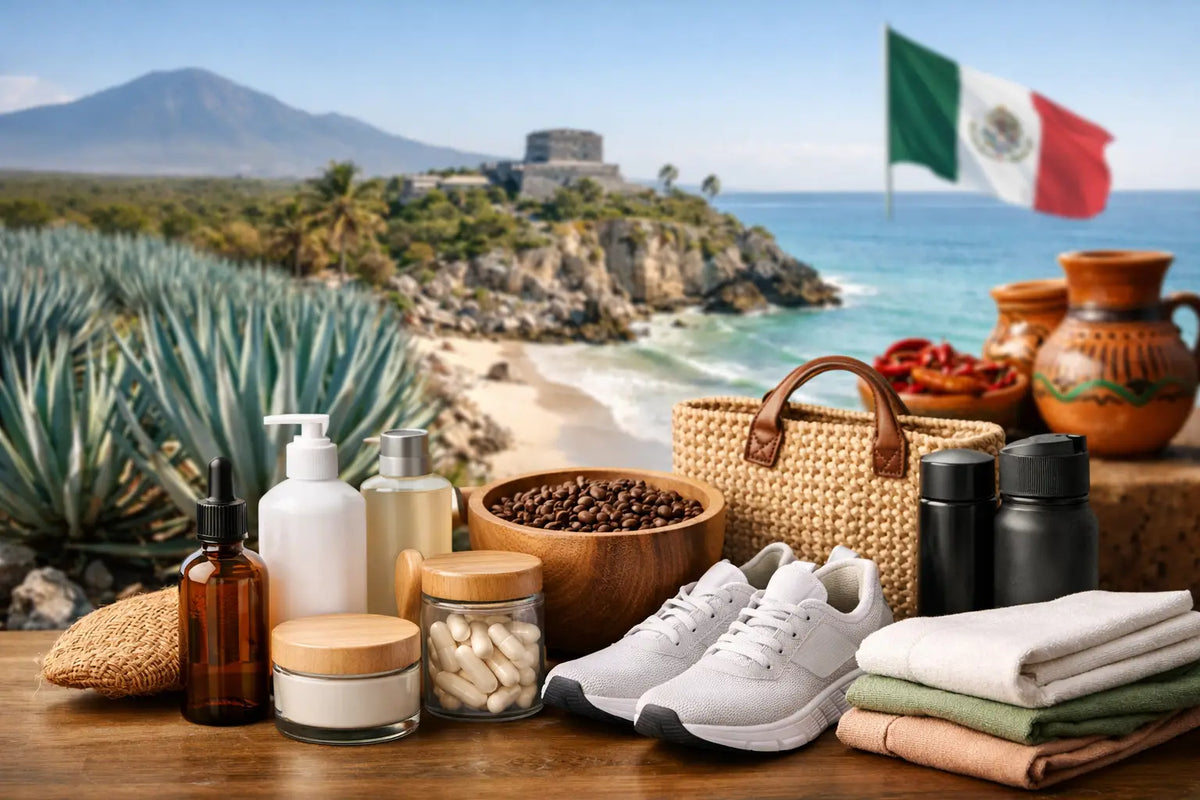
A private label program only works when the product can be replenished at the same speed it sells. That is why the best private label products Mexico can manufacture are often categories where design flexibility, manageable minimums, and short transit times matter as much as factory pricing.
For U.S. buyers, Mexico is not a one-category sourcing market. It is a practical production base for consumer goods that need customization, repeat orders, regional supply chain control, or a faster path from sample approval to shelf. The strongest opportunities are products with established manufacturing depth, accessible materials, and a clear reason to stay close to the U.S. market.
What Makes a Product a Strong Private Label Fit?
The best product is rarely the one with the lowest quoted unit cost. A better question is whether a factory can produce it consistently, customize it without excessive setup costs, and support replenishment without forcing you into inventory-heavy commitments.
Mexico is especially competitive when a product has moderate complexity, requires frequent communication, or benefits from quick quality checks. Buyers can work in aligned time zones, visit production more easily, and avoid building a sourcing strategy around long ocean freight cycles. That control can protect margin even when a distant supplier offers a lower ex-factory price.
A strong private label candidate typically has four characteristics:
- Demand is proven, but branding, material, packaging, or sizing can differentiate the offer.
- The product can be produced with realistic minimum order quantities for the stage of your business.
- Reorders matter, making shorter production and transit windows commercially valuable.
- Quality standards are specific enough to document and inspect before shipment.
Best Private Label Products Mexico Can Produce
Apparel and Activewear
Apparel is one of Mexico's most established private label categories. Buyers can source basics such as T-shirts, fleece, polos, uniforms, loungewear, underwear, and socks, as well as more specialized programs in activewear, workwear, resortwear, and fashion-forward collections.
The opportunity is not limited to adding a neck label. A capable manufacturer may support custom patterns, graded sizing, fabric selection, dye colors, embroidery, screen printing, hangtags, polybags, and retail-ready packaging. That makes Mexico particularly useful for brands that want a distinct product rather than a generic blank with a logo.
Apparel does require discipline. Fabric availability, fit approval, color consistency, and trim lead times can affect delivery. Start with a focused assortment, approve pre-production samples carefully, and confirm whether the quoted MOQ applies per style, color, or size run. Those details determine whether an attractive quote is operationally workable.
Footwear and Leather Goods
Mexico has deep capabilities in footwear, especially in regions known for leatherwork and shoemaking. Private label opportunities include casual shoes, boots, sandals, slippers, work footwear, handbags, belts, wallets, and small leather accessories.
This category is a strong fit for retailers and brands that need material quality and construction to carry the brand story. Custom uppers, linings, outsole options, hardware, embossing, labels, dust bags, and boxes can create a premium offer without developing an entirely new supply chain.
The trade-off is development time. Footwear samples and molds require more coordination than simple apparel. Buyers should ask early about last availability, outsole tooling, size scale, leather grades, and defect tolerances. For a new brand, adapting proven factory constructions can be faster and less capital-intensive than building a fully custom shoe from scratch.
Furniture and Home Goods
Mexico is a practical source for furniture, décor, textiles, and hard goods for home programs. Product options include wood furniture, upholstered seating, metal-frame pieces, tables, shelving, ceramic décor, glassware, bedding, towels, cushions, throws, baskets, and kitchen textiles.
Nearshore sourcing is especially valuable for furniture because freight can change the economics of bulky goods quickly. Shorter shipping routes and easier factory coordination help buyers manage damage risk, packaging standards, and replenishment. Hospitality buyers, interior-focused retailers, and e-commerce brands can also benefit from smaller initial runs than many offshore programs require.
Not every home product should be sourced the same way. Solid wood furniture demands clear specifications for wood species, moisture content, finishes, joinery, carton testing, and assembly instructions. Soft goods depend on fabric quality, fill material, shrinkage, and wash testing. The winning supplier is the one that can document those standards, not simply produce an appealing sample.
Bags, Accessories, and Promotional Goods
Bags and accessories offer a useful middle ground between fashion and functional merchandise. Mexico can support private label backpacks, totes, travel bags, cosmetic bags, caps, belts, jewelry, sunglasses cases, work accessories, and promotional products for corporate or retail programs.
These products are often easier to launch than a full apparel line because sizing is simpler and customization can be concentrated in visible details. A custom color palette, woven label, zipper pull, patch, lining, or packaging treatment can make a familiar product feel brand-specific.
Buyers should still control component quality. Request details on material weights, hardware finishes, stitch counts, logo application methods, and packaging. For products intended for high-volume promotional use, prioritize repeatable construction and lead-time reliability over elaborate customization that slows every reorder.
Specialty Food and Beverage Products
Mexico is an obvious sourcing market for private label food categories with regional authenticity and established ingredient supply. Opportunities may include coffee, spices, sauces, salsa, snacks, confectionery, dried fruit, honey, agave products, tortillas, and beverage mixes.
Food can create strong differentiation, but it is also the category where compliance must lead the conversation. U.S. import requirements, labeling, nutrition panels, allergen declarations, shelf-life validation, lot traceability, temperature needs, and facility certifications all affect whether a product is ready for market.
For buyers with the right regulatory support, Mexican specialty foods can be a compelling private label program because freshness, cultural relevance, and fast replenishment are tangible advantages. Start with products that have stable formulations and clear packaging requirements. Avoid treating food sourcing like a simple logo exercise.
Personal Care and Wellness Products
Private label soaps, candles, bath products, hair care, skincare, fragrance, and wellness accessories can also be viable, depending on the manufacturer's capabilities and your compliance requirements. This category suits brands that need a cohesive sensory experience, attractive packaging, and an ongoing replenishment model.
The opportunity comes with added responsibility. Ingredient documentation, stability testing, claims language, labeling, safety data, and packaging compatibility should be reviewed before committing to a launch. A factory that can fill jars is not automatically qualified to support product claims or regulated formulations.
For emerging brands, starting with proven base formulas and customizing fragrance, packaging, and brand presentation can reduce development risk. More complex formulations make sense when demand and launch volume justify the additional testing and production work.
How to Select the Right Mexican Private Label Supplier
Product category is only half the decision. The supplier must match your operating model. Before requesting quotes, define the target retail price, expected order volume, required certifications, customization level, packaging needs, target delivery date, and acceptable quality tolerance. A precise brief produces more comparable quotes and fewer surprises after sampling.
Then evaluate suppliers beyond the sample. Ask what they manufacture in-house, which processes are subcontracted, how they manage material purchasing, and whether they can support repeat orders at your expected cadence. Confirm the MOQ for the finished product and for each custom element. A low MOQ on the product may not apply to custom fabric, printed packaging, molded components, or special finishes.
Quality accountability should be built into the process. Use approved specifications, production samples, inspection checkpoints, carton requirements, and written acceptance standards. Direct communication and on-the-ground verification are part of the nearshore advantage, not optional extras. Platforms such as FastLane can help buyers access vetted manufacturers while keeping supplier communication, quote requests, and order protection in one procurement workflow.
Build for Replenishment, Not Just Launch
The most profitable private label products are usually not the most novel. They are the products buyers can reorder confidently because quality stays consistent, lead times are predictable, and inventory does not have to sit in a warehouse for months.
Choose a product where Mexico's proximity changes the business case. That may mean faster fashion replenishment, lower-risk furniture launches, retail-ready home goods, regional food programs, or branded accessories that can move from approved sample to repeat order without losing control. Start with a focused SKU set, validate the supplier relationship, and expand only after the production process proves it can keep pace with demand.


