

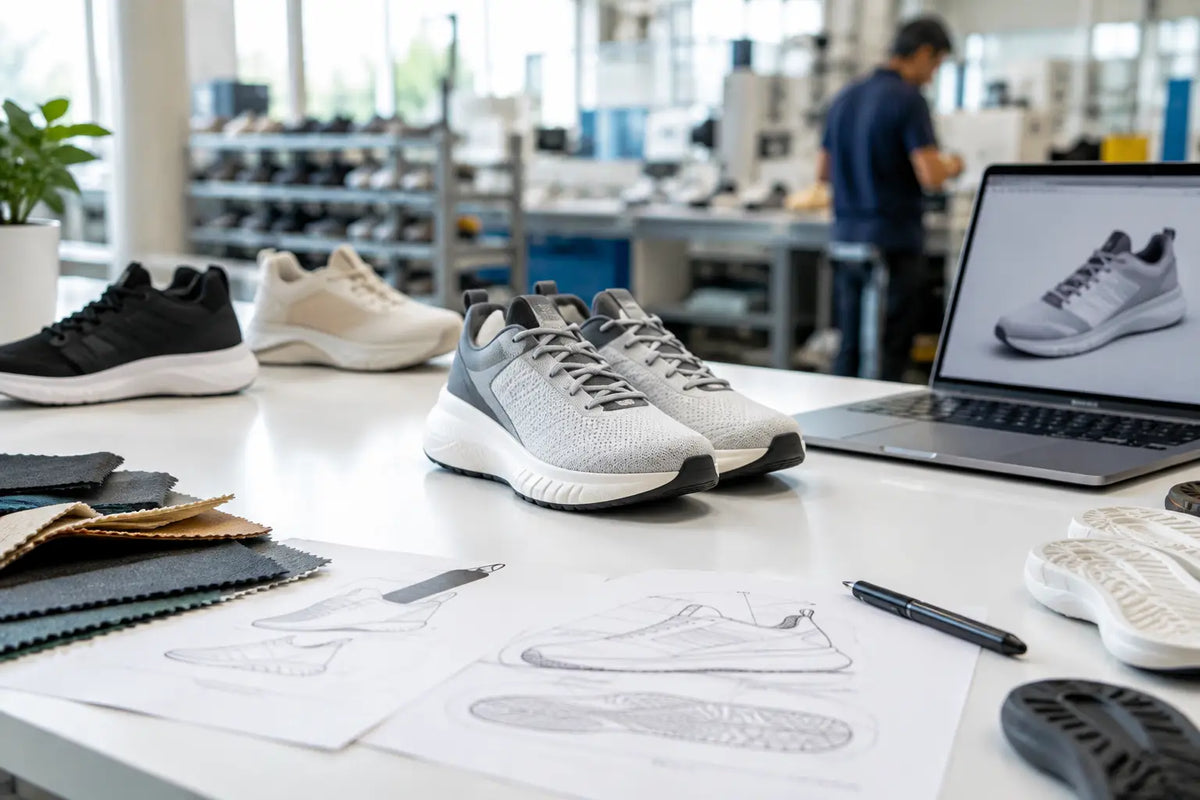
A footwear launch can fail long before the first pair reaches a customer. The usual problem is not a lack of design ideas. It is choosing custom footwear manufacturers that cannot support the materials, fit standards, order volume, or replenishment speed the business actually needs.
For U.S. brands, retailers, and wholesale buyers, the right factory is more than a production resource. It is a supply chain decision that affects landed cost, inventory exposure, launch timing, quality consistency, and the ability to react when a style sells through. Nearshore production in Mexico and Latin America gives buyers a practical way to keep that decision closer to home.
What Custom Footwear Manufacturing Really Includes
Custom footwear can mean very different things depending on the factory and the program. At one end, a supplier may offer white-label styles with limited changes: your colors, packaging, logo treatment, and size run applied to an existing silhouette. This is often the fastest path for testing a category or adding footwear to an established brand.
At the other end is full private-label development. The manufacturer may build a new upper pattern, source specific leather or textiles, create outsole tooling, develop lasts, produce samples, and manage graded sizing. That level of customization gives a brand more differentiation, but it also brings higher development costs, longer approval cycles, and typically higher minimums.
A credible factory should be specific about where it operates on that spectrum. If a supplier calls every logo application "custom," buyers can end up expecting original product development while receiving a catalog program with cosmetic adjustments.
Why Nearshore Custom Footwear Manufacturers Change the Equation
Footwear has a long chain of dependencies. Materials need to arrive on time. Uppers need to be cut and stitched accurately. Components must match in color and finish. Lasting, bonding, finishing, packing, and inspection all need to happen without creating defects that only become visible after delivery.
Distance adds risk to every handoff. Offshore production can make sense for large, stable programs with mature specifications and container-level volume. But it becomes less attractive when a buyer needs frequent communication, smaller initial commitments, or quick replenishment. A missed sample revision can cost weeks when approvals move across large time-zone gaps.
Nearshore manufacturing shortens the operational loop. U.S. buyers can communicate during aligned business hours, review samples more quickly, and reach factories without the travel burden of a long-haul sourcing trip. Transit is generally faster than Asia-based procurement, which can reduce the amount of inventory a brand must commit to before it has clear demand signals.
This does not mean every Latin American factory will be the lowest quoted unit-cost option. Labor, material sourcing, and construction complexity all matter. The advantage is often found in total economics: less cash tied up in inventory, lower air-freight dependence, fewer delays, faster reaction to sell-through, and better control over quality decisions.
How to Evaluate Custom Footwear Manufacturers
The strongest sourcing process starts with production fit, not a search for the lowest price. A factory experienced in casual sneakers may not be the right partner for molded EVA slides, leather boots, safety footwear, or performance running shoes. Construction expertise is category-specific.
Match the Factory to the Product Construction
Ask what types of footwear the factory produces routinely and what construction methods it controls in-house. Relevant capabilities may include cemented construction, vulcanization, strobel construction, direct injection, stitching, leather cutting, molded components, and outsole assembly.
Request examples that resemble your intended product in material, complexity, and price tier. A factory can have attractive samples while lacking experience with the tolerance requirements of your category. For instance, soft leather sandals and technical trail shoes require very different patterns, components, testing, and quality controls.
Also clarify which parts of production are outsourced. External outsole molding, printing, or specialized material treatments are not automatically a problem. What matters is accountability. The manufacturer should own the timeline, inspection standards, and corrective action when a subcontracted component fails.
Confirm MOQ by Style, Color, and Size Run
A quoted minimum order quantity can hide important limits. A factory may accept 300 pairs per style but require 100 pairs per color, restrict certain materials to larger runs, or require a full size curve that does not fit your demand profile.
Get the MOQ structure in writing before approving development. Ask separately about minimums for sample orders, first production runs, repeat orders, custom materials, custom outsoles, packaging, and logo hardware. This is particularly important for emerging brands that need to test several colorways without taking on excessive inventory.
Lower MOQs are valuable only if the cost structure remains workable. A small run with high development charges, expensive component purchases, and weak quality oversight can still create a poor margin outcome. The goal is not simply a smaller order. It is an order size that lets the business validate demand without compromising the product.
Treat Sampling as a Production Test
A sample is not just a creative milestone. It is your first test of how the factory communicates, interprets specifications, documents revisions, and manages quality.
Your sample approval process should cover fit, comfort, material hand feel, color, stitching, bonding, logo placement, packaging, and labeling. For products with functional claims, define the relevant tests before production begins. A photo approval is rarely enough for footwear because small construction issues can affect wearability, durability, or fit.
Keep a written record of every approved detail. This includes a bill of materials, color standards, artwork files, placement measurements, size grading, packaging requirements, carton markings, and acceptable quality limits. The approved sample should be tied to those documents so the production team is not working from memory or an informal chat thread.
Price the Full Program, Not the Pair
A factory quote is only one part of the buying decision. To compare suppliers accurately, buyers need a complete view of costs and responsibilities. That means separating the ex-factory price from development fees, tooling, materials, testing, packaging, freight, duties, broker charges, and quality inspections.
Custom outsole tooling is a common decision point. It can create a product that is more defensible and recognizable, but the upfront cost and lead time may be hard to justify until the silhouette proves demand. Using an existing outsole can accelerate the first launch and lower risk, especially for a new private-label program.
Payment terms deserve the same scrutiny. A low unit price may come with a large deposit, limited flexibility on material purchases, or no recourse if production misses the approved standard. Clear commercial terms and order protection matter because a footwear order is often difficult to repurpose once branded components are applied.
Build Quality Control Into the Purchase Order
Footwear quality cannot be managed only at final inspection. Problems such as inconsistent upper cutting, uneven stitching, weak adhesive bonds, incorrect insole placement, and color variation are easier and less expensive to correct while production is underway.
Agree on checkpoints before cutting begins. Review incoming materials, pre-production samples, initial production output, in-line assembly, and final packed goods. Define what happens if the factory finds a material shortage or a component changes after approval. The earlier those issues are surfaced, the more options a buyer has.
For U.S. resale, confirm that labeling, country-of-origin marking, material disclosures, packaging, and any applicable category requirements are planned into the program. Compliance should not be treated as a last-minute packing task. It needs to be reflected in the product specifications and reviewed with the manufacturer early.
A Better Brief Produces Better Quotes
Factories can quote quickly only when buyers provide enough detail to price the right product. A vague request for "custom sneakers" produces vague pricing, uncertain lead times, and repeated clarification. A concise but complete manufacturing brief gives every supplier the same basis for a commercial response.
Include the target silhouette, reference images, intended customer, materials, size range, colorways, branding locations, packaging, initial quantity, expected reorder volume, target retail price, target delivery date, and destination. If any detail is still open, identify it clearly rather than letting the factory assume.
FastLane helps buyers bring that information into a more controlled nearshore sourcing process, with verified supplier access, direct communication, quote requests, and trade support in one environment. That structure is especially useful when comparing multiple factories without losing track of specifications or commercial terms.
The best first order is rarely the one with the most options. It is the one designed to answer the most important question: can this factory deliver a sellable product, at a repeatable quality level, on a timeline that supports your business? Choose the partner that gives you a clear answer, then build the next run with real sales data in hand.


