

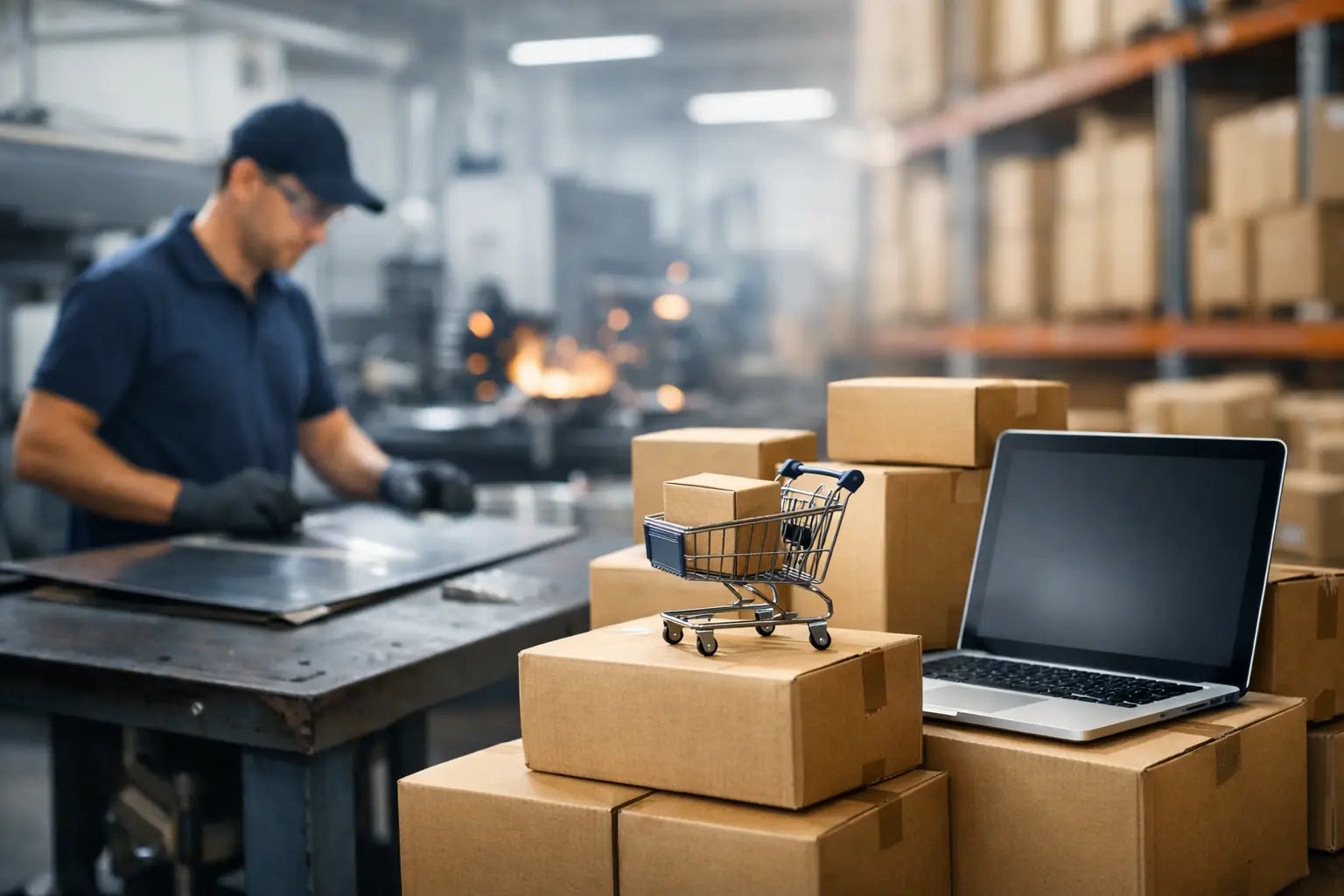
A product can look profitable in a spreadsheet and still fail on Amazon because the factory cannot replenish fast enough, meet labeling requirements, or hold quality steady from one production run to the next. Manufacturers for Amazon sellers need to support more than a low unit price. They need to help protect inventory velocity, account health, and margin.
That changes how sellers should source. The right partner is not simply the factory that offers the cheapest quote. It is the manufacturer that can produce a compliant product at a workable minimum order quantity, communicate clearly when changes arise, and keep replenishment close enough to demand.
Why Manufacturers for Amazon Sellers Need Different Criteria
Amazon creates a strict operating environment. A late shipment can lead to stockouts. A packaging error can delay inbound receiving. A product that differs from approved samples can trigger returns, negative reviews, and costly removals. Sellers cannot treat manufacturing as a one-time purchasing task.
The best sourcing decisions begin with the full landed cost, not the ex-factory price. That means accounting for packaging, freight, duties, inspection, prep, storage, returns risk, and the cash tied up in inventory. A supplier with a slightly higher unit price but a shorter lead time may produce better economics because the seller can order less inventory more often.
This is especially relevant for private label brands. Early demand is rarely predictable. Committing to a large overseas MOQ before a product has proven itself can turn a promising launch into months of excess inventory, discounting, and storage fees. Lower MOQs create room to test colors, bundles, sizes, and product improvements without making one large bet.
Start With the Product Economics, Not a Factory Search
Before requesting quotes, define what the product must achieve commercially. A manufacturer can only quote accurately when the buyer has a clear product brief. Vague requests produce vague pricing, missed specifications, and difficult comparisons between suppliers.
Your brief should cover product dimensions, materials, construction, color references, packaging, branding, target quantity, and required delivery window. For Amazon products, include barcode placement, carton requirements, suffocation warnings where applicable, inserts, and whether units need prep for direct delivery to a fulfillment center or a third-party prep provider.
Set a margin target that includes inventory risk
Work backward from the expected selling price. Factor in Amazon referral fees, fulfillment fees, advertising costs, product cost, inbound freight, and a realistic allowance for returns or defects. Then establish the maximum landed cost that still leaves enough margin to operate and grow.
Do not use a single optimistic freight estimate. Run a conservative scenario as well. Freight rates, customs treatment, and warehouse handling can shift, particularly for bulky items, furniture, footwear, or products with complex packaging. A quote that looks attractive before logistics can become expensive after it reaches your warehouse or fulfillment network.
Decide what can be standardized
Customization is valuable when it creates a meaningful reason to buy. It is expensive when it adds complexity without raising conversion or price. Consider starting with a proven base product and focusing customization on materials, finish, branding, packaging, or a bundle configuration.
A factory that offers white-label options may help you launch more quickly. A private-label program with custom molds, components, or proprietary construction can create stronger differentiation, but it usually requires more development time and capital. The right path depends on category competition, available cash, and how much product risk the business can absorb.
How to Vet a Manufacturer Before You Place an Order
Supplier selection should be a structured process, not a reaction to the lowest quote. Ask direct questions, compare answers across vendors, and document every specification that affects the finished product.
First, confirm that the manufacturer actually produces the product category rather than acting only as a trading intermediary. An intermediary is not automatically a problem, but the buyer should understand who controls production, quality, materials, and timelines. Direct factory access generally gives Amazon sellers more control when revisions are needed.
Next, assess capacity against your reorder plan. A supplier may be able to make an initial run but struggle when demand doubles. Ask about typical production lead times, peak-season constraints, material availability, and how quickly they can repeat a previously approved order. Replenishment reliability matters more than a one-time promise.
Quality control needs the same attention as pricing. Define acceptable tolerances, test requirements, packaging standards, and the approval process for pre-production and production samples. For products in regulated or safety-sensitive categories, ask for the documentation relevant to your marketplace and product type. Compliance responsibilities vary by category, so do not assume a supplier's existing paperwork covers your exact listing or destination market.
A serious manufacturing conversation should also clarify payment terms, remedies for defective goods, ownership of tooling or custom designs, and what happens if materials change. These details are easier to resolve before production than after inventory has shipped.
Why Nearshore Manufacturing Changes the Replenishment Model
For many sellers, sourcing from Mexico and Latin America can reduce the distance between demand signals and production decisions. Instead of forecasting months ahead and ordering deep inventory to compensate for a long transit window, a nearshore model can support smaller, more frequent replenishment cycles.
That does not mean nearshore manufacturing is automatically the lowest-cost option for every product. Highly commoditized goods with mature, high-volume supply chains may still price aggressively in Asia. But unit price is only one variable. When lower MOQs, shorter transit routes, reduced inventory exposure, and easier communication improve total margin, the nearshore option can be commercially stronger.
Time zone alignment also has practical value. Product questions, sample revisions, production updates, and quality issues can be addressed during the same business day. That reduces the lag that often turns a small issue into a delayed launch. For brands operating lean teams, faster communication is a real operational advantage.
Nearshore sourcing is particularly useful for products with seasonal demand, changing trend cycles, bulky freight profiles, or frequent assortment updates. Apparel, accessories, home goods, furniture, and specialty food products often benefit from closer production because buyers can react to sales data instead of relying entirely on long-range forecasts.
Build a Supplier Relationship That Can Scale
A factory relationship works best when both sides have a clear operating rhythm. After approval, share rolling forecasts, expected reorder timing, and upcoming product changes. Forecasts are not purchase orders, but they help manufacturers reserve capacity and plan materials.
Keep a version-controlled specification sheet for each SKU. It should include approved materials, measurements, colors, artwork, packaging, carton configuration, and inspection points. If a product changes, issue a revised document rather than relying on a message thread. This discipline prevents costly confusion as volume grows.
For first orders, consider a controlled production run rather than maximizing quantity. Use it to validate product quality, packaging performance, transit durability, inbound receiving, listing feedback, and customer return patterns. The first run should generate information, not just inventory.
A marketplace such as FastLane can simplify this process by giving buyers access to vetted regional suppliers, direct communication, quote requests, and trade protections in one sourcing environment. The goal is not to remove diligence from the buyer's process. It is to replace fragmented searching with a more accountable path to production.
Questions to Ask Before You Request a Quote
A quote is only useful if the scope is clear. Before moving forward, get answers to these operational questions:
- What are the MOQ, sample cost, tooling cost, and price breaks at higher volumes?
- What is the production timeline after sample approval and deposit?
- Which materials, packaging, labeling, and testing are included in the quoted price?
- Can the factory support private label, custom packaging, and Amazon-ready preparation?
- How are defects handled, and what quality checks occur before shipment?
- What lead time can the supplier reliably support for repeat orders?
The strongest Amazon supply chains are built for adjustment. Choose manufacturing partners that give you visibility, manageable commitments, and enough speed to act when the market tells you what to do next.


