

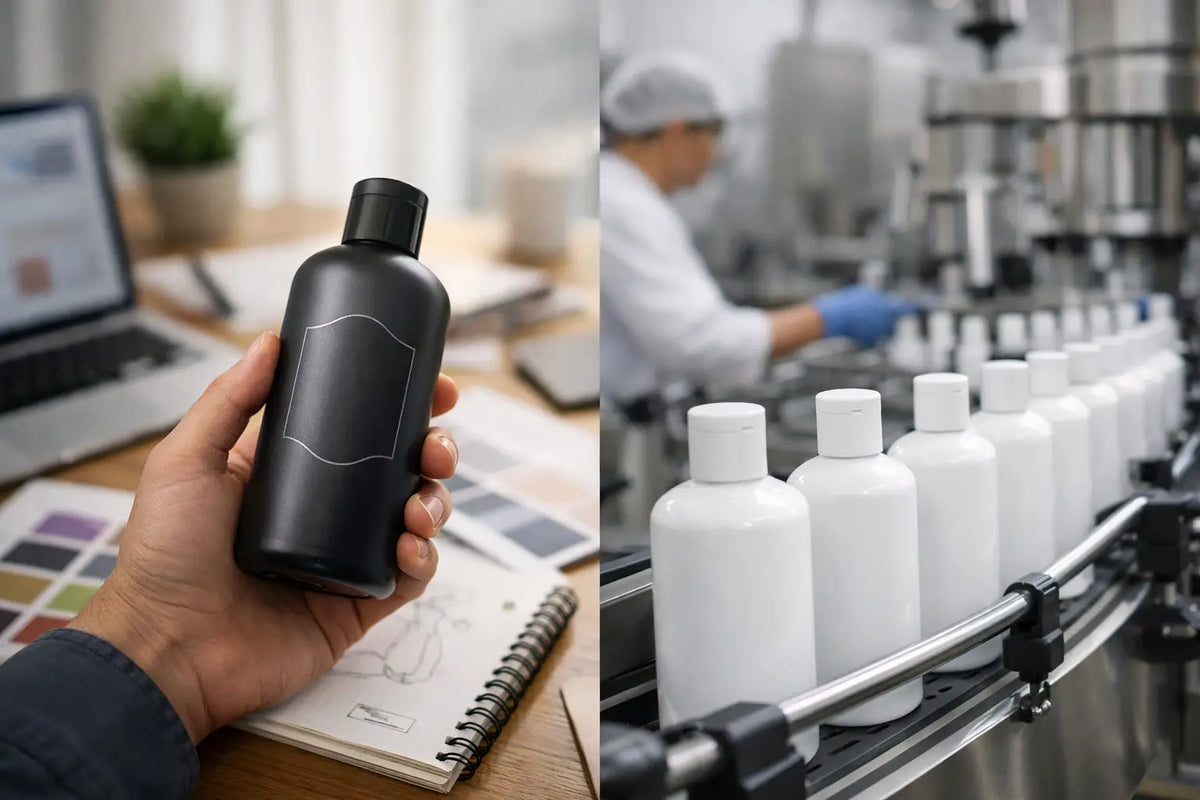
A product opportunity can disappear while you wait for custom development, samples, and a container from across the world. That is why the decision between private label vs white label manufacturing is not just a branding choice. It determines how quickly you can launch, how much inventory you must commit to, and how much control you retain as demand changes.
For U.S. brands, retailers, and wholesale buyers, the right model depends on the role the product will play in the business. Are you validating demand, expanding an existing assortment, building a differentiated brand, or replenishing a proven bestseller? The answer should shape your sourcing strategy before you request a quote.
Private Label vs White Label Manufacturing: The Core Difference
Private label manufacturing means a factory produces goods specifically for your brand. The product may be built from an existing factory platform, but you control the branding and can often customize materials, colors, packaging, sizing, features, or formulation. In more developed programs, you may also own the product specifications and tooling.
White label manufacturing means the supplier offers a ready-made product that multiple buyers can sell under their own branding. Your label, packaging, and sales channel may be distinct, but the underlying product is generally the same one available to other customers.
The distinction is simple: private label gives you more product ownership and differentiation; white label gives you a faster path to market. Neither is automatically better. The stronger choice is the one that matches your sales timeline, cash position, category, and competitive position.
Choose White Label When Speed Matters Most
White label is designed for buyers who want to enter a category without funding a full product-development cycle. The manufacturer has already developed the item, sourced the materials, established a production process, and often tested quality performance. Your work focuses on selecting the product, applying your brand, and confirming packaging requirements.
This model works particularly well for retailers filling assortment gaps, hospitality buyers sourcing branded goods, Amazon sellers testing a new category, and emerging brands that need evidence of demand before investing in customization. A white label candle, basic tote bag, throw pillow, or pantry product can get to market far faster than a fully custom alternative.
The operational advantages are meaningful. Because the factory is making a repeatable item, minimum order quantities may be lower, sample approval is usually more straightforward, and production planning can move faster. Buyers also face fewer variables when pricing an initial order.
The trade-off is limited exclusivity. Another brand may sell a similar product, possibly through the same marketplace or retail channel. Your differentiation must come from positioning, merchandising, bundle strategy, packaging, customer experience, and the strength of your distribution. If the product itself is the reason customers buy, white label may not provide enough protection.
What to verify before placing a white label order
A ready-made product still needs commercial due diligence. Ask whether the product is actively sold to other buyers, what branding elements can be changed, and whether the factory can reserve a colorway, packaging format, or territory for a defined period. Confirm current material availability and production capacity rather than relying on an old catalog photo.
You should also request clear specifications. “Standard quality” is not a specification. Define dimensions, material composition, color tolerances, labeling requirements, packaging, inspection standards, and acceptable defect thresholds. Faster sourcing only works when the order is precise enough to execute without assumptions.
Choose Private Label When Differentiation Drives Margin
Private label is the better fit when your goal is to build a recognizable product program rather than simply place your name on a stock item. It lets you shape the product around a clear customer need, brand promise, price point, or retail strategy.
For example, an apparel brand may use a factory’s existing silhouette but specify a unique fabric weight, custom wash, proprietary trim, size grading, and branded packaging. A home goods company may adjust dimensions, finishes, hardware, and carton design to meet a retailer’s requirements. A specialty food buyer may develop a distinct recipe, portion format, and label system.
These choices can create better margins because you are not competing only on price against identical products. A differentiated product gives buyers a stronger reason to choose your brand, supports premium positioning, and reduces direct comparison with commodity listings.
Private label also creates more control over the long term. As sales data comes in, you can refine the specification, add variations, and build a coordinated collection. That control is valuable for retailers expanding exclusive programs and for DTC brands looking to turn repeat purchases into lasting brand equity.
The cost of that control is greater complexity. Custom materials, components, molds, printing, formulas, and packaging can raise MOQs, lengthen timelines, and require more rounds of sampling. Some factories will charge development fees or require deposits for tooling. These are not necessarily red flags. They are normal parts of creating a product that is not interchangeable.
Private label does not always mean fully custom
Many buyers assume private label requires starting from a blank page. In practice, the most efficient programs often begin with an existing factory capability and customize the elements that customers actually notice.
This approach can reduce development risk while still producing a meaningful point of difference. You might retain a proven furniture frame but select exclusive upholstery and finishes. You might use an established footwear construction with your own materials, colors, branded outsole details, and packaging. The result is more distinctive than white label without the cost and delay of inventing every component.
Compare the Real Costs, Not Just Unit Price
The lowest quoted unit price does not always produce the best landed margin. White label may have a lower upfront cost, but a product with weak differentiation can force discounting later. Private label may cost more per unit, yet deliver stronger average order values, lower price sensitivity, and better wholesale appeal.
Look beyond the factory quote. Include sample costs, packaging, freight, duties and tariff exposure where applicable, quality inspections, storage, markdown risk, and the cash tied up in minimum order quantities. Most importantly, consider the cost of being out of stock. A product that takes months to replenish can lose revenue even if its initial unit cost is attractive.
Nearshore manufacturing can change this calculation. Sourcing from Mexico and Latin America can reduce transit time to the U.S., support smaller and more frequent replenishment orders, and make in-person or real-time factory communication more practical. For a fast-moving category, that responsiveness may matter more than shaving a few cents from a unit produced farther away.
A Practical Decision Framework for Buyers
Start with your product strategy. If you need to test a category, fill a seasonal assortment need, or launch quickly with limited capital, white label is often the disciplined first move. It allows you to validate sales before committing to product development.
If your business depends on distinctive design, specialized performance, exclusive retail programs, or premium margins, private label is usually worth the additional planning. The key is to customize with purpose. Invest in the features that create customer value, not every possible variation.
Your order volume matters too. A low-MOQ white label program may be ideal for a first run of several hundred units. Once demand is established, moving the winning SKU into private label can improve differentiation and unit economics. This staged approach avoids treating sourcing as a one-time decision.
Factory fit matters just as much as product fit. Look for manufacturers with demonstrated experience in your category, clear communication, transparent quoting, and the capacity to grow with your program. A supplier that can produce a beautiful sample but cannot maintain quality across repeat orders is not a strategic partner.
Build a Sourcing Model You Can Replenish
The best private label and white label programs are built around repeatability. Your manufacturer should understand approved samples, bill of materials, packaging standards, delivery windows, and quality expectations before production begins. That documentation protects both parties and makes future orders faster.
FastLane helps buyers compare verified nearshore manufacturers with different capabilities, from ready-to-brand white label products to more customized private label production. The objective is not simply to find a factory. It is to create a supply option that gives your business more control over launch timing, inventory risk, and replenishment.
Choose the model that supports your next commercial milestone, then keep enough flexibility to change it as the product proves itself. A fast white label launch can reveal what customers want. A focused private label program can turn that insight into an asset competitors cannot easily copy.


