

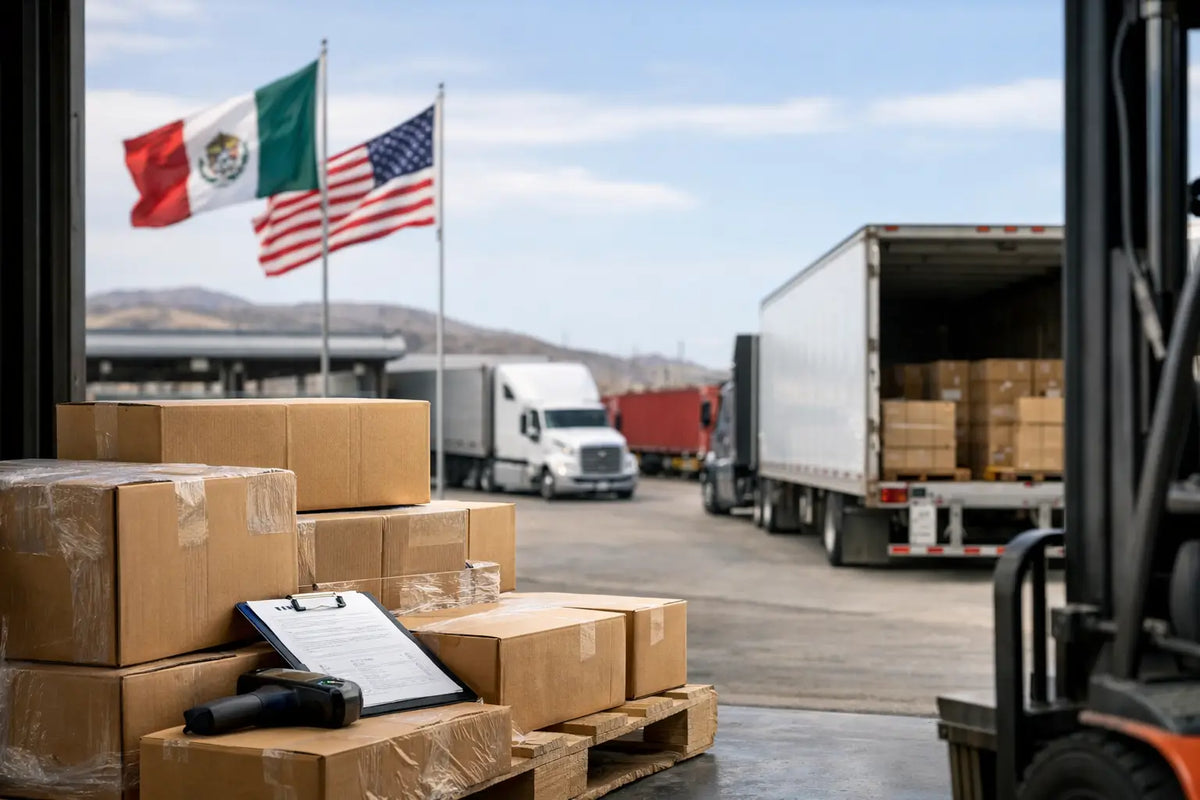
A product that leaves a factory in Mexico can often reach a U.S. distribution point in days, not weeks. That changes more than freight timing. For brands importing goods from Mexico, nearshore supply can reduce inventory exposure, support smaller production runs, and make replenishment a practical operating model instead of a forecast gamble.
Mexico is not automatically the lowest-cost source for every product or every order size. It is often the stronger option when speed, communication, flexible MOQs, and supply chain visibility matter as much as unit price. The buyers who get the best results treat Mexico sourcing as a controlled procurement process, not a simple border transaction.
Why importing goods from Mexico changes the buying equation
The advantage starts with distance. Ocean freight from Asia requires long planning windows, port variability, and larger inventory commitments. Manufacturing in Mexico puts production closer to U.S. demand, with truck, rail, air, and ocean options depending on the origin and destination. That can mean faster samples, faster production feedback, and a much shorter path from finished goods to your warehouse.
Time-zone alignment is equally practical. A product manager in Chicago or Los Angeles can resolve a specification question with a Mexican factory during the same workday. That reduces the lag that turns a small packaging change or color approval into a lost week.
For growing brands, lower MOQs can be the bigger financial win. Ordering closer to demand helps preserve working capital and limits the risk of holding slow-moving inventory. A higher per-unit cost may still produce better margins when it reduces markdowns, storage, expediting, and capital tied up in oversized purchase orders.
That said, the model depends on category and supplier fit. Heavy, low-margin goods may need careful freight modeling. Highly specialized components may still be concentrated in Asia. The case for Mexico becomes strongest when the factory can meet your quality, capacity, customization, and repeat-order requirements.
Start with the landed-cost model, not the factory quote
A low factory price is not a sourcing strategy. Before issuing a purchase order, build a landed-cost model that captures the full cost to place sellable inventory in your facility.
Your model should account for product cost, packaging, domestic freight in Mexico, cross-border freight, customs brokerage, duties, taxes where applicable, cargo insurance, inspection, warehousing, and delivery to the final destination. If you are importing private-label products, include artwork setup, samples, molds or tooling, and compliance testing where relevant.
The tariff treatment of goods from Mexico depends on the product, its classification, and whether it qualifies for preferential treatment under the United States-Mexico-Canada Agreement, or USMCA. “Made in Mexico” is not enough on its own. Origin qualification follows product-specific rules, which can consider the materials and processing used to make the finished item.
Work with a qualified customs broker or trade professional to confirm the Harmonized Tariff Schedule classification and applicable duty treatment before you commit. Misclassification and unsupported origin claims can create delays, unexpected duty bills, or penalties. A supplier should be able to provide the product details, material breakdowns, and origin documentation needed to support your import process.
Vet the manufacturer like a long-term operating partner
The strongest supplier relationship begins before the first quote. Verify that the factory actually produces the category you want, rather than acting only as a trader or subcontracting the work without transparency.
Ask focused questions about production capacity, standard lead times, peak-season constraints, quality control procedures, export experience, and prior work with U.S. specifications. Review samples against written standards, not just a verbal approval. For a private-label program, confirm who owns tooling, patterns, artwork files, and product specifications if the relationship ends.
Factory capabilities matter beyond the core product. A furniture buyer may need packaging engineered for parcel delivery. An apparel brand may need grading, labeling, wash testing, and consistent color matching. A specialty food buyer may need traceability, ingredient records, shelf-life controls, and compliant labeling. The right supplier is the one that can reliably manage the complete production requirement.
Supplier verification should also cover commercial accountability. Confirm the legal entity receiving payment, the factory location, references where available, and escalation contacts. For new supplier relationships, defined milestones and protected payment terms are generally safer than sending full payment before production evidence exists.
Get the commercial terms in writing
Cross-border sourcing becomes expensive when responsibilities are vague. Your purchase order or manufacturing agreement should define the product specification, approved sample, quantities, tolerances, price, currency, payment schedule, production deadline, packaging requirements, and quality acceptance criteria.
It should also state the agreed Incoterm. Incoterms allocate responsibilities for transport, risk transfer, and certain costs between buyer and seller. They do not replace a clear commercial agreement, and they should always identify the named place. “Delivered” without a precise location creates avoidable confusion.
For many buyers, using a structure that gives them control over freight and customs is useful, especially once volumes increase. But control brings responsibility. If you are the importer of record, you are accountable for accurate entry information and regulatory compliance, even when a broker files the customs entry on your behalf.
Build an inspection point into the process. Depending on the product and order value, that may mean a pre-production review, an in-process check, a pre-shipment inspection, or all three. Define what happens if goods fail inspection: rework timelines, replacement terms, chargebacks, or the right to withhold final payment.
Prepare the documents before the truck reaches the border
A border crossing is only as efficient as the paperwork behind it. Your broker and freight provider will typically need commercial documents that accurately describe the goods, quantity, value, country of origin, shipper, consignee, and shipment terms. Product classification data and USMCA support, when applicable, should be ready before pickup.
The exact requirements vary by product. Consumer goods may require labeling and safety documentation. Food, beverages, cosmetics, and other regulated categories can trigger requirements from agencies such as the FDA. Children’s products, electrical goods, textiles, wood products, and products containing controlled materials may have additional rules.
Do not leave compliance to the last production week. Identify agency requirements while the product is still being designed. A label that omits a required disclosure, a product that fails a test, or an ingredient record that cannot be produced quickly can stop an otherwise ready shipment.
Build a repeatable import file
For every SKU, keep a centralized record with the approved specification, supplier details, tariff classification rationale, country-of-origin support, testing records, labels, packing configuration, and prior entry data. This reduces friction on repeat orders and helps new team members understand why a product is classified and shipped a certain way.
A repeatable file is also a quality-control tool. If a supplier changes a material, component source, packaging format, or production location, your team can quickly assess whether the commercial terms, origin analysis, or compliance requirements need to change.
Plan logistics around replenishment, not just first delivery
The first shipment proves whether a supplier can make the product. The second and third shipments prove whether the supply chain can scale. Set reorder points based on actual production lead time, transit time, customs clearance, warehouse receiving, and a reasonable buffer for variability.
Mexico gives buyers more routing flexibility than distant sourcing, but freight still requires planning. Cross-border trucking can be fast, while rail may suit certain lanes and volume profiles. Air freight can solve an urgent problem, but it should not be the default answer to poor planning. For coastal or specialized routes, ocean service may still make commercial sense.
Measure supplier performance with a small set of operational metrics: on-time production completion, defect rate, fill rate, quote response time, and variance from approved samples. Review those metrics after each order. The goal is not to create bureaucracy. It is to identify whether a delay came from the factory, your approval cycle, freight coordination, or an unclear specification.
FastLane helps buyers bring this process into one sourcing environment, connecting verified manufacturers with direct communication, quote workflows, and order protection. That structure is especially useful when you need factory access without building a fragmented network of brokers, spreadsheets, and disconnected service providers.
Nearshore manufacturing works best when it is treated as an ongoing advantage, not a one-time sourcing shortcut. Build supplier relationships that can respond to real demand, protect product standards, and support the next reorder before your inventory position becomes urgent.


