

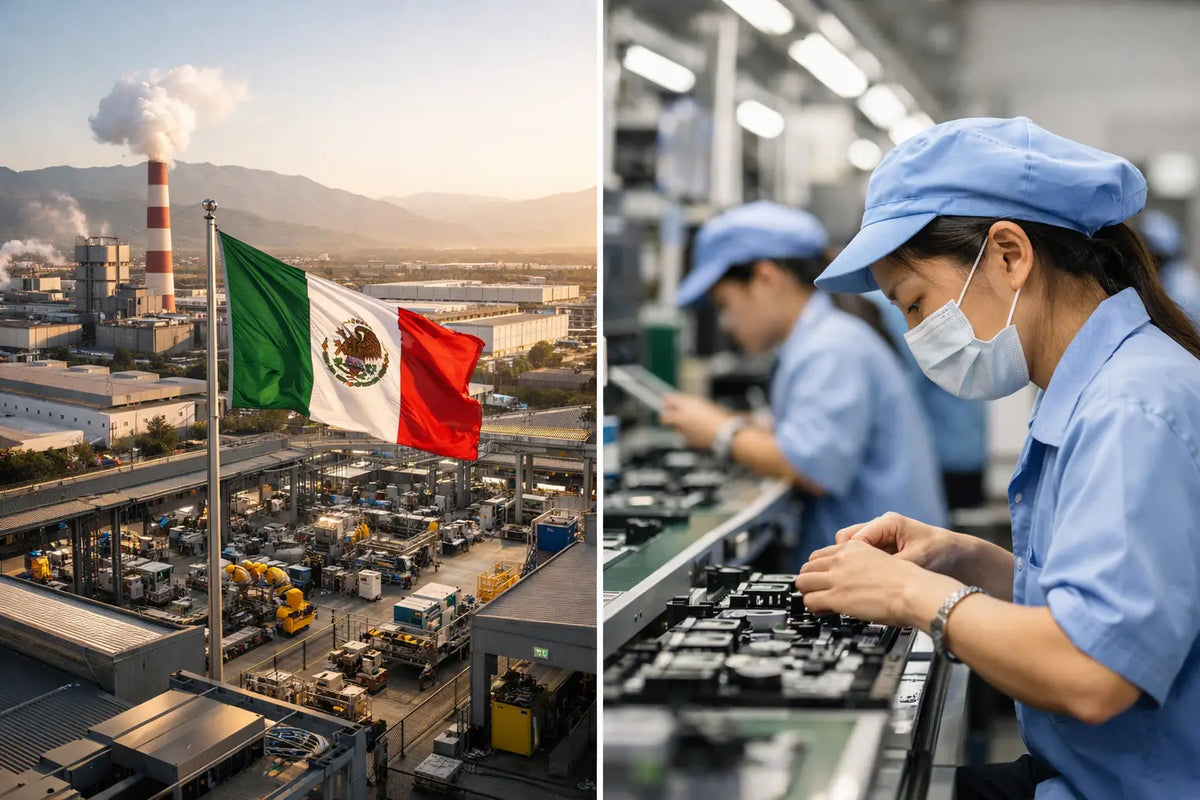
A late container does not just delay a shipment. It can leave a retail shelf empty, force an e-commerce brand into expensive air freight, or turn a seasonal buy into dead inventory. That is why the Mexico factories vs Asian suppliers decision is no longer a simple comparison of unit price. It is a decision about cash flow, replenishment speed, visibility, and how much control your team has once production begins.
For many U.S. buyers, Asian sourcing still makes sense for high-volume, mature programs. But Mexico has become a serious operating advantage for brands that need smaller runs, faster turns, private label flexibility, and a supply chain that can respond to demand instead of guessing months ahead.
Mexico Factories vs Asian Suppliers: The Operating Difference
The biggest difference is distance, but the commercial impact goes much further than freight mileage. A factory in Mexico can often ship to U.S. destinations by truck in days. Ocean freight from Asia commonly requires weeks on the water, plus port handling, customs clearance, domestic drayage, and a buffer for congestion or schedule changes.
That changes the way inventory has to be managed. When lead times are long, buyers place larger orders earlier because they need protection against stockouts. Larger orders tie up working capital and increase the risk of being wrong about color, size, demand, or seasonality. Nearshore production can support tighter reorder cycles, allowing buyers to carry less speculative inventory while staying closer to actual sales data.
Mexico also puts supplier conversations in a more workable rhythm. U.S. teams can communicate during aligned business hours, review samples without waiting overnight for every response, and visit facilities without building an international trip around a 12-hour time difference. That does not eliminate the need for clear specifications or production controls. It does make issues easier to catch and resolve before they become a container-sized problem.
| Sourcing factor | Mexico factories | Asian suppliers |
| --- | --- | --- |
| Transit to the U.S. | Often days by ground freight | Often weeks by ocean freight |
| Typical order flexibility | Frequently more accessible for emerging and mid-size brands | Can favor higher-volume commitments |
| Collaboration | Aligned U.S. business hours and easier site visits | Time-zone gaps can slow decisions |
| Unit cost | May be higher on some products | Often lowest on labor-intensive, high-volume goods |
| Inventory model | Supports faster replenishment | Requires more forecasting and safety stock |
| Category depth | Strong in many North American supply chains | Exceptional breadth across global manufacturing categories |
Lead Time Is a Margin Issue, Not Just a Logistics Metric
A lower factory quote can look compelling until the full landed cost is visible. Buyers need to account for international freight, port fees, customs handling, insurance, inventory carrying costs, financing, expedited shipments, and the margin lost when product arrives after the selling window.
Consider a brand ordering a fashion-driven home accessory. If a supplier in Asia offers a lower unit price but requires a long production and transit cycle, the buyer may need to commit far ahead of demand. If the trend softens, the savings per unit can disappear in markdowns. A Mexico factory with a modestly higher ex-factory price may create a better total outcome if the brand can order closer to demand and replenish winning SKUs quickly.
The same logic applies to stockouts. A fast-selling product that cannot be replenished for two or three months creates lost revenue and can weaken marketplace ranking, retailer relationships, and repeat purchase momentum. For products with volatile demand, short selling seasons, or frequent assortment changes, speed is often worth more than the lowest possible unit cost.
MOQs Determine How Much Risk You Buy
Minimum order quantities are one of the clearest dividing lines for small and mid-sized buyers. Large Asian suppliers are built to serve scale, and many are excellent at it. Their pricing structures often depend on long production runs, consolidated material purchasing, and standardized manufacturing processes. For established products with proven volume, that efficiency can be valuable.
The challenge comes when a buyer is testing a new product, launching a private label line, adding a retailer-specific assortment, or expanding into a new category. A high MOQ forces the business to buy confidence it may not yet have. It also leaves less cash available for marketing, packaging development, product photography, and the next reorder.
Many Mexico factories are better positioned for practical production runs, particularly when working with buyers who need customization without a massive opening commitment. MOQ flexibility is not universal - it varies by factory, material, tooling, and product complexity. Still, nearshore sourcing gives emerging brands more room to test, learn, and scale from validated demand rather than warehouse speculation.
Quality Control Works Better When Accountability Is Close
Quality problems are expensive anywhere. The difference is how quickly a buyer can inspect, document, correct, and prevent them. With overseas sourcing, a defect found after arrival may require a difficult negotiation across time zones, a costly rework plan, or acceptance of a compromised shipment. Returning goods is rarely a practical answer.
Mexico's proximity enables a more hands-on quality model. Buyers can arrange pre-production approvals, in-process inspections, final checks, and factory visits with less travel time and less operational friction. Bilingual communication can also reduce the ambiguity that causes errors in packaging copy, labeling, materials, measurements, and finishing requirements.
Proximity is not a substitute for supplier vetting. Buyers should still verify factory capabilities, confirm quality systems, approve samples, document tolerances, and define inspection standards before issuing a purchase order. The strongest sourcing relationship is built on clear accountability, not assumptions about geography.
Tariffs and Trade Rules Need Product-Level Analysis
Tariff exposure is a major reason buyers are reevaluating offshore supply chains, but it should be assessed carefully. Duty rates depend on the product's classification, country of origin, component sourcing, and applicable trade rules. Mexico can offer advantages for qualifying goods under regional trade frameworks, but qualification is not automatic simply because final assembly occurs in Mexico.
A buyer should evaluate the complete product structure: where materials originate, where substantial transformation takes place, how the item is classified, and what documentation is required. This is especially relevant for categories with imported components, such as apparel, footwear, furniture, and certain consumer goods.
The practical takeaway is not that every product should move to Mexico. It is that a sourcing decision based only on a factory quote is incomplete. A disciplined comparison includes duty exposure, freight volatility, lead-time risk, inventory costs, and the administrative work required to keep goods moving.
When Asian Suppliers Are Still the Better Choice
Asia remains the right fit in several situations. If you need highly specialized components, deeply established manufacturing ecosystems, custom tooling at large scale, or enormous production capacity, an experienced Asian supplier may be difficult to replace. Categories such as complex electronics, technical components, and products dependent on specialized machinery can benefit from supplier networks that have developed over decades.
Asian factories can also be highly competitive when demand is stable and order volumes are large enough to justify longer planning cycles. A retailer with a proven, year-round SKU and reliable forecasts may prioritize the lowest sustainable unit cost over rapid replenishment.
The better question is not which region is universally superior. It is which supply chain model fits the product and the business stage. A mature, high-volume core product may belong offshore, while a new private label collection, a seasonal program, or a fast-moving bestseller may be better served closer to the U.S. market.
Build a Portfolio, Not a Single Point of Failure
The most resilient buyers do not treat Mexico and Asia as an either-or decision. They segment sourcing by product economics and risk. They may keep high-volume, predictable items with an established Asian partner while moving time-sensitive products, lower-MOQ tests, replenishment programs, or customized collections to Mexico.
This approach creates optionality. It reduces dependence on one transit lane, one supplier region, or one long-range forecast. It also gives procurement teams leverage: more visibility into costs, more alternatives when capacity tightens, and more ways to serve customers without overcommitting capital.
FastLane helps U.S. buyers evaluate that nearshore option by connecting them with verified manufacturers across Mexico and Latin America, with direct communication and a clearer path from quote to production.
The right factory is not simply the one that offers the cheapest quoted unit. It is the partner that lets your business reorder with confidence, protect margin when demand changes, and keep product moving when timing matters most.


