

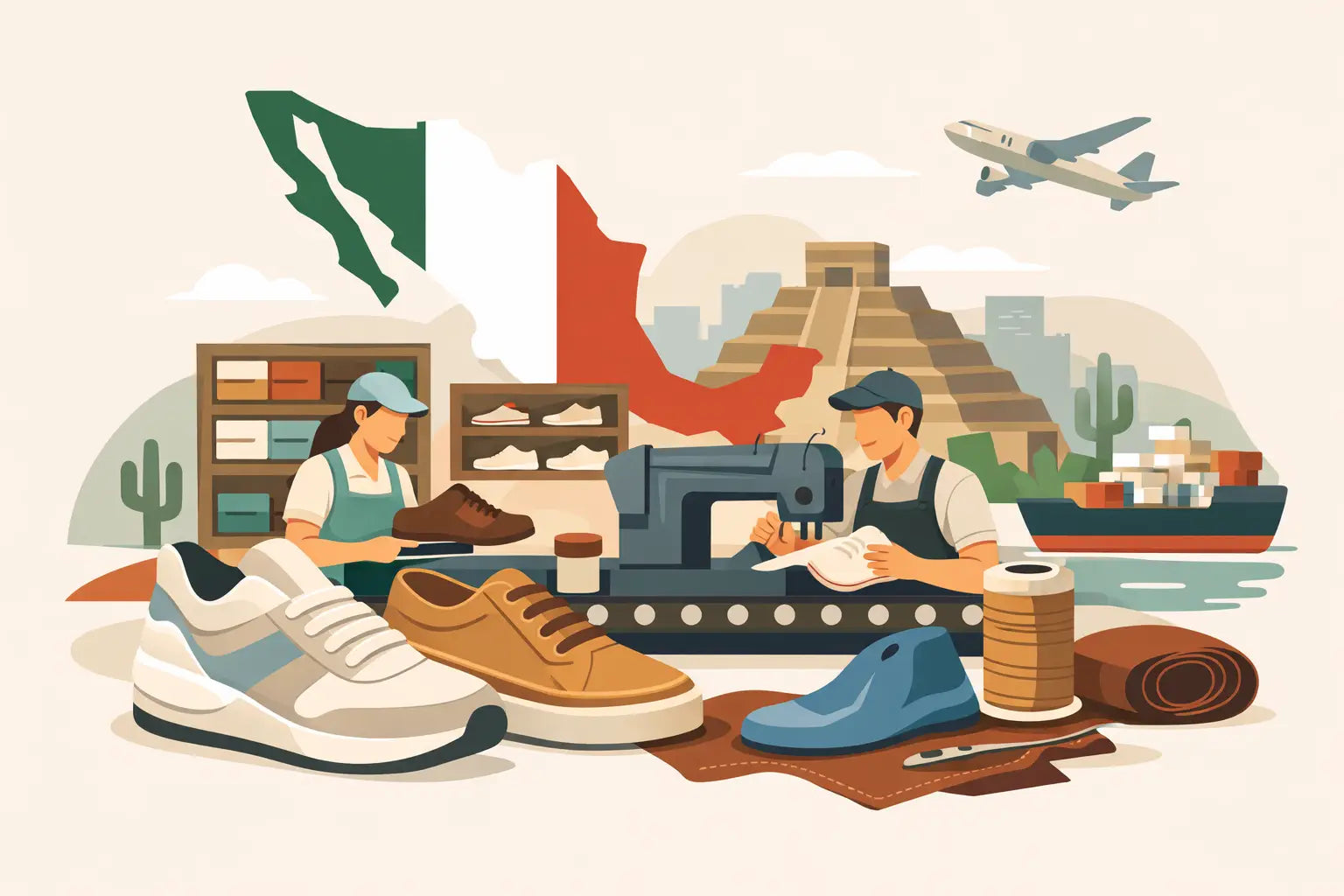
If your current footwear supply chain requires 90-day waits, oversized MOQs, and late-night factory calls across time zones, the problem is not just cost - it is control. That is why more U.S. brands are looking at private label footwear manufacturers Mexico as a practical way to launch faster, replenish sooner, and reduce sourcing risk without sacrificing product quality.
Mexico is not the right fit for every footwear program. But for buyers who care about shorter lead times, easier communication, and tighter operational oversight, it is increasingly one of the strongest nearshore options available. The real advantage is not geography alone. It is the ability to run a more responsive business.
Why private label footwear manufacturers in Mexico are gaining traction
Footwear is one of the harder categories to source well. Sizing consistency, comfort, materials, outsole performance, construction quality, packaging, and labeling all need to align. When production sits far from your market, every revision adds time and cost.
Mexico changes that equation for many U.S. buyers. Transit is shorter. Factory communication is easier. Product development cycles can move faster because approvals, sample reviews, and production adjustments do not get trapped in long offshore timelines. If you sell in-season collections, trend-driven styles, uniform programs, or replenishment-based assortments, that speed matters.
There is also a commercial advantage. Many Mexican manufacturers are better positioned than large offshore factories to support lower MOQs and more flexible runs, especially for growing brands, regional retailers, hospitality groups, and specialty distributors. That does not mean every factory will take small orders. It means buyers often have more room to negotiate realistic production terms for private label programs.
What Mexico does well in private label footwear
Mexico has deep manufacturing capability in leather goods and footwear, with established clusters that support cutting, stitching, lasting, assembly, and finishing. Depending on the factory, buyers can source casual shoes, sandals, boots, work footwear, fashion styles, and some uniform or specialty categories under private label.
Private label usually means more than adding a logo to a box. A capable manufacturer should be able to support brand-specific uppers, sole selections, material changes, colorways, packaging, labeling, and size runs. Some factories can also assist with pattern adaptation, prototype development, and sourcing components locally or regionally.
This is where expectations matter. If your program depends on highly technical athletic performance footwear with complex tooling and advanced material engineering, Asia may still offer broader specialization at scale. If your goal is commercially viable fashion, casual, leather, resort, lifestyle, work, or small-batch branded footwear, Mexico can be a very strong fit.
How to evaluate private label footwear manufacturers Mexico
The right factory is not the one with the best pitch deck. It is the one that can consistently produce the exact product you need at the margin, speed, and quality level your business requires.
Start with category alignment. A boot factory is not automatically a sandal factory, and a leather dress shoe specialist may not be the right partner for injected EVA casual styles. Ask what they already make, what construction methods they use, and which materials they handle most often. Existing capability is usually more valuable than promised capability.
Then look closely at development process. Strong footwear manufacturers should be able to explain how sampling works, what is required for tech packs or reference samples, how fit testing is handled, and what changes are still possible before production is locked. If the process sounds vague, expect delays later.
Quality control is another major filter. Ask how the factory checks incoming materials, monitors in-line production, and inspects finished pairs before packing. Footwear defects are expensive because they affect both returns and brand trust. Glue issues, uneven sizing, poor stitching, outsole separation, and inconsistent finishing can erase your margin quickly.
Lead times should be discussed in practical terms, not best-case terms. Get clarity on sample timing, production timing, material lead times, and shipping windows. Nearshore sourcing is valuable because it can move faster, but only if the manufacturer has the operational discipline to support that promise.
MOQ, pricing, and the trade-off buyers should expect
One of the biggest reasons buyers consider Mexico is lower MOQ flexibility. For emerging brands, that can be the difference between launching a line and shelving the idea. Smaller runs reduce inventory exposure, improve testing, and make it easier to expand into new styles without overcommitting cash.
Still, lower MOQ does not automatically mean lower unit cost. In many cases, the per-pair price in Mexico may be higher than high-volume offshore production. The smarter comparison is total landed and operating cost.
If Mexico helps you buy fewer units upfront, replenish faster, avoid overstock, reduce quality disputes, and react to market demand in weeks instead of months, a higher factory price can still produce better margins. This is especially true for brands that lose money through markdowns, delayed launches, or excess inventory tied up in slow-moving styles.
For buyers used to chasing the lowest ex-factory price, this is the adjustment. Mexico often wins on speed, flexibility, and control rather than on the absolute cheapest unit cost at very large scale.
Common mistakes when sourcing footwear in Mexico
The first mistake is assuming every manufacturer offers true private label capability. Some suppliers are better described as stock product wholesalers with light customization. That model can work for certain buyers, but it is different from developing a real branded line with your own materials, packaging, and specifications.
The second mistake is under-specifying the product. Footwear requires detailed direction. If you only provide a photo and a target price, the result will usually vary from what you imagined. A stronger brief includes materials, outsole preferences, construction notes, branding placement, packaging requirements, target fit, and intended use.
The third mistake is ignoring compliance and commercial terms. Buyers should confirm payment terms, defect resolution process, sample charges, production approval requirements, and packaging standards before placing an order. If the arrangement depends on assumptions, those assumptions usually become expensive.
Another common issue is choosing a factory based only on responsiveness. Fast replies are useful, but they are not proof of manufacturing discipline. The real test is whether the supplier can document capabilities, quote accurately, produce consistent samples, and hold timelines.
Who should consider Mexico for private label footwear
Mexico is especially attractive for U.S. buyers who need shorter replenishment cycles, moderate production volumes, and clearer communication with suppliers. That includes DTC brands launching seasonal styles, retailers building exclusive private label assortments, hospitality groups sourcing branded footwear programs, and wholesalers testing regional demand without committing to container-scale inventory.
It is also a strong option for buyers trying to diversify away from a single overseas sourcing region. Nearshoring part of your assortment can create more resilience. You may keep some high-volume programs offshore while shifting faster-moving or more margin-sensitive styles closer to the U.S. market.
This hybrid model is often the most practical. It gives buyers flexibility without forcing an all-or-nothing sourcing strategy.
What a strong sourcing process looks like
A productive footwear sourcing process starts with clarity. Know your target retail price, target landed cost, materials, packaging, expected volumes, and launch timeline before you approach factories. The more precise your brief, the faster a supplier can tell you whether the program is realistic.
Next, validate manufacturing fit before negotiating too hard on price. Review product examples, ask detailed production questions, and confirm whether the supplier has handled similar constructions before. A cheap quote from the wrong factory usually becomes a costly delay.
Sampling should be treated as a control stage, not a formality. Check fit, finishing, comfort, labeling, packaging, and consistency against your specifications. If revisions are needed, make them before approving bulk production.
Finally, protect execution. Clear order documentation, milestone tracking, and quality accountability matter just as much as the initial quote. This is where a vetted sourcing environment can save time and reduce risk. Platforms such as FastLane help buyers move beyond fragmented supplier searches and into a more controlled sourcing workflow with verified manufacturer access and direct communication.
Private label footwear manufacturing in Mexico works best for buyers who value speed with discipline. If you want lower inventory risk, faster development cycles, and a supply chain you can actually manage, nearshoring your footwear program is not just a sourcing shift - it is an operating upgrade. The right factory will not simply make shoes. It will help you sell with more confidence and restock with less guesswork.


