

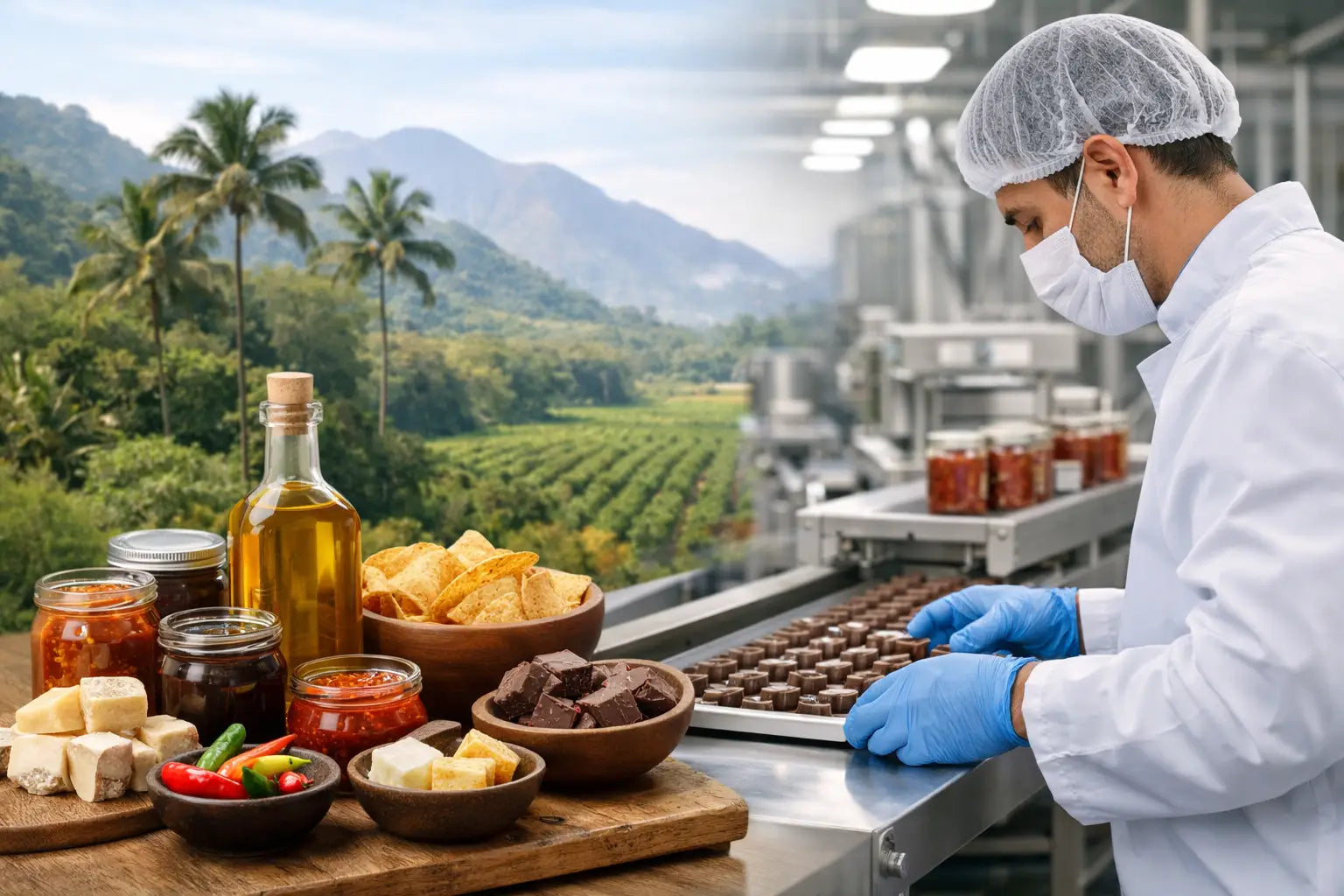
The specialty food manufacturers Latin America buyers need are not simply factories with available capacity. They are production partners that can protect flavor consistency, meet labeling requirements, manage food-safety controls, and replenish inventory without forcing a brand to overbuy months in advance. For U.S. retailers, private-label operators, and growing food brands, that distinction directly affects margins, shelf availability, and customer trust.
Latin America offers more than geographic proximity. Mexico and other regional production hubs give buyers a practical path to shorter transit times, lower minimum order quantities, and direct collaboration in compatible time zones. The opportunity is substantial, but food sourcing demands a more disciplined approach than buying a finished consumer good. Ingredients, claims, packaging, shelf life, and regulatory documentation all need to be defined before a purchase order is released.
Why Specialty Food Manufacturing Is Moving Closer to Market
Long offshore supply chains create a difficult equation for specialty food. A buyer may secure an attractive unit price, then lose the advantage to long ocean transit, larger inventory commitments, slow formula revisions, or products arriving with less remaining shelf life than planned. The issue is even more pronounced for brands with seasonal assortments, fresh flavor profiles, or products that require controlled storage.
Nearshore manufacturing changes the operating model. A U.S. buyer can move from sample approval to production with faster communication and more visibility into what is happening at the facility. Replenishment can be planned in smaller, more frequent cycles rather than one oversized order designed to cover a lengthy overseas lead time.
That does not mean every product should move to Latin America. Highly commoditized products with massive volumes may still favor established offshore capacity. But for differentiated food products where agility, quality control, and private-label flexibility matter, proximity often has more commercial value than the lowest quoted factory price.
What Specialty Food Manufacturers in Latin America Can Produce
The region supports a broad mix of shelf-stable, refrigerated, frozen, and ingredient-based categories. Mexico is especially well positioned for products built around peppers, corn, beans, cacao, coffee, tropical fruit, spices, agave, and regional culinary traditions. Buyers can also find manufacturers serving mainstream retail formats, premium gifting, foodservice, and direct-to-consumer programs.
Common sourcing opportunities include sauces and condiments, salsas, seasoning blends, snacks, candies, baked goods, coffee, chocolate, fruit products, beverages, and ready-to-prepare meal components. Many suppliers can support white-label production using an existing formula, while others can help develop a custom recipe, flavor profile, pack size, or branded presentation.
The right category depends on the supplier's actual capabilities, not just the products shown in a catalog. A co-packer that excels at hot-fill sauces may not be equipped for frozen products. A strong dry-blend facility may not have the allergen segregation, certifications, or packaging line required for a nut-containing snack. Treat every capability claim as a starting point for qualification.
Private Label Is More Than Putting a Logo on a Package
Private label programs often begin with a stock formula and a branded label. That can be the fastest route to market, especially when a buyer needs a proven product with a manageable MOQ. It can also limit differentiation if the same base product is offered to multiple customers.
Custom manufacturing creates more control but usually requires more development work. Formula adjustments, ingredient substitutions, nutritional targets, packaging specifications, and shelf-life testing can add time and cost. Buyers should decide early whether speed or exclusivity is the priority. A staged approach often works well: launch with a validated base product, then move to a custom formula once demand is proven.
How to Qualify a Food Manufacturer Before Requesting a Quote
A quote is only useful when the manufacturer understands the product requirements. Sending a vague request for "private-label snacks" will produce vague pricing and inconsistent comparisons. Buyers should prepare a concise product brief that identifies the product format, target market, expected volume, packaging, desired certifications, shelf-life expectations, and delivery destination.
For a serious evaluation, confirm the facility's food-safety program, current certifications, traceability procedures, allergen controls, sanitation practices, and lot coding process. Ask how the supplier handles nonconforming product, recalls, ingredient shortages, and changes to approved specifications. These are operational questions, not paperwork exercises. The answers show whether a factory can support a growing retail program.
Documentation should also be reviewed against the U.S. sales channel. A product intended for an independent specialty store may have different commercial demands than one intended for a national retailer, Amazon fulfillment network, or hospitality distributor. Label format, nutrition information, ingredients, allergens, country-of-origin marking, case packing, pallet configuration, and barcode requirements should be settled before final artwork is approved.
Evaluate the Full Landed Cost, Not the Ex-Factory Price
A low factory quote can hide expensive friction. Buyers need to account for packaging components, export preparation, freight, customs, storage conditions, broker fees, inspection requirements, and the carrying cost of inventory. For temperature-sensitive products, cold-chain reliability and delivery scheduling can be more important than a small difference in unit cost.
Nearshore sourcing can improve unit economics because it reduces the need to finance excessive inventory. When a buyer can reorder faster, less cash is tied up in product sitting in a warehouse. The benefit is not automatic, however. It depends on demand forecasting, order frequency, freight consolidation, and whether the manufacturer can maintain consistent production slots.
Build Specifications That Prevent Costly Surprises
Food projects fail when key decisions remain verbal. A clear specification document creates a shared standard between buyer and manufacturer. It should cover ingredients, approved substitutions, sensory expectations, target weights, nutritional parameters, packaging materials, artwork version control, case configuration, shelf life, storage conditions, and acceptable quality tolerances.
For example, "medium heat salsa" is not a specification. A usable specification identifies flavor profile, heat range, texture, fill weight, pH or process requirements where applicable, acceptable visual variation, container type, tamper evidence, label placement, and lot-code location. The more precise the brief, the easier it is to compare quotes and hold production accountable.
Samples matter, but one approved sample is not enough. Buyers should understand whether the sample was made on the actual production line, with commercial-scale ingredients and final packaging. Pilot runs can reveal issues that lab samples do not: filling inconsistencies, label application problems, breakage in transit, or changes in texture after weeks of storage.
Use Smaller MOQs Strategically
Lower MOQs are one of the strongest reasons to work with specialty food manufacturers in Latin America, but buyers should not treat them as permission to order without a plan. Small batches cost more per unit, particularly when custom packaging, unique ingredients, or dedicated production setup is involved.
The better use of a lower MOQ is risk reduction. It allows a brand to test a flavor, retail channel, or promotional bundle before committing to a large inventory position. It also makes it easier to introduce seasonal items, regional assortments, or limited-edition products without betting the budget on a single forecast.
As sales become predictable, buyers can negotiate around annual volume rather than insisting on a large first order. A manufacturer may be more willing to improve pricing when it sees a credible reorder schedule, forecast visibility, and a buyer who manages approvals efficiently.
Create Accountability From Sample to Shipment
The strongest supplier relationship is built around a repeatable process: product brief, supplier qualification, sample approval, written specifications, purchase order, pre-production confirmation, in-process checks, final inspection, shipping documents, and post-delivery review. Skipping steps may feel faster until a packaging or quality issue reaches a customer.
Direct communication is especially valuable when formula changes or supply disruptions occur. Time-zone alignment makes it easier to resolve decisions during the business day rather than waiting overnight for clarification. That speed helps, but it does not replace written approvals. Every material change should be documented, including ingredient substitutions, packaging revisions, and revised lead times.
FastLane gives buyers a more controlled way to identify verified regional suppliers, compare manufacturing options, request quotes, and communicate directly with factories. The goal is not to add another layer between buyer and producer. It is to reduce the uncertainty that makes cross-border sourcing slow and difficult to manage.
The best specialty food program starts with a product buyers can sell, but it earns repeat orders through disciplined sourcing. Choose a manufacturer that can protect the product standard, communicate early when conditions change, and scale at the pace your demand actually supports. That is how a closer supply chain becomes a competitive advantage rather than just a shorter route to market.


