

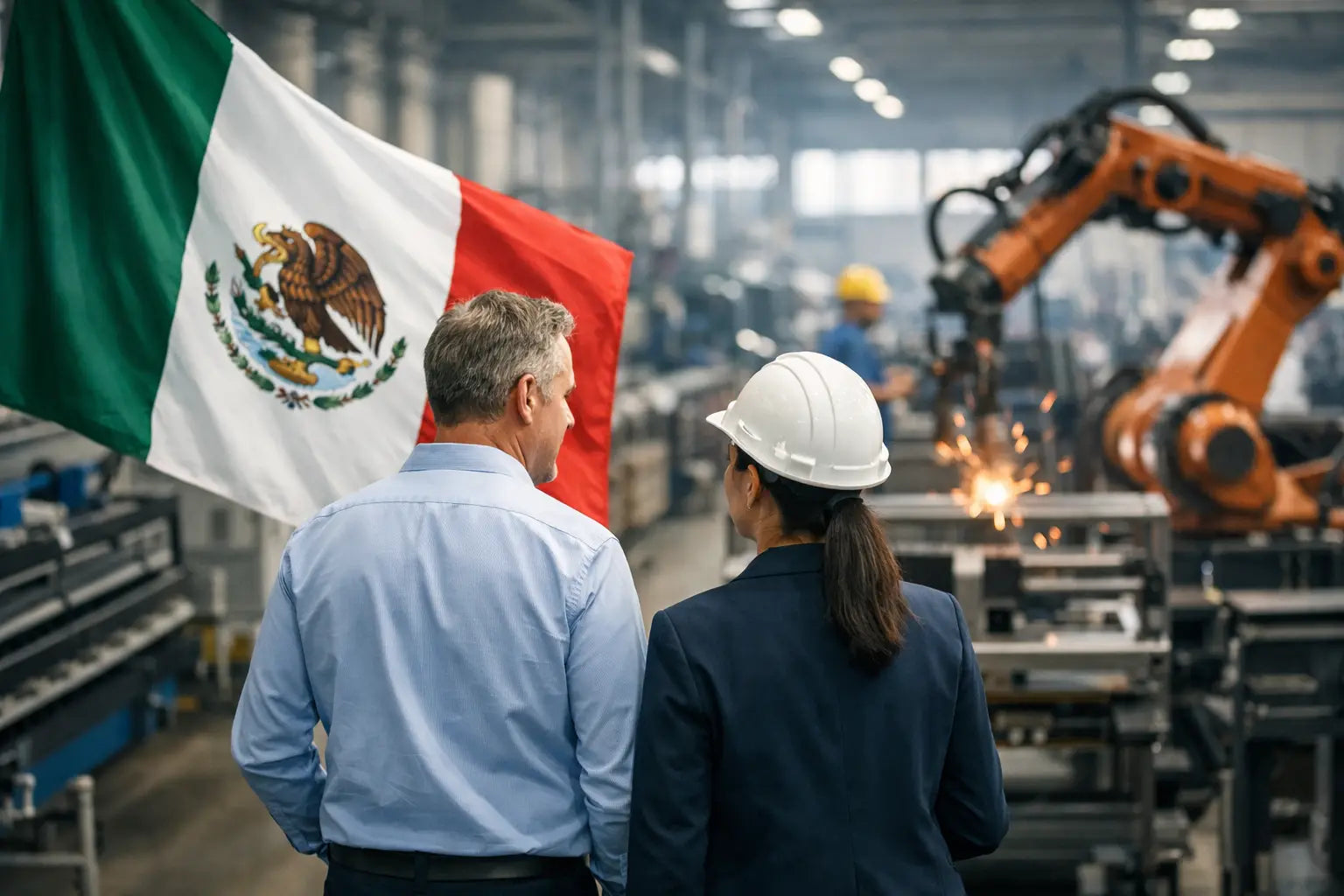
If your last overseas production cycle left you waiting 90 days for inventory, guessing at factory timelines, and absorbing margin hits from freight and tariff shifts, nearshore manufacturing Mexico starts to look less like a sourcing trend and more like an operating advantage. For U.S. buyers, the real appeal is simple: shorter lead times, easier communication, lower inventory risk, and more control over how products get made.
That matters whether you are building a private label line, replenishing a retail program, or trying to avoid tying up cash in oversized purchase orders. Mexico is not a blanket replacement for every offshore factory, and it is not the cheapest option in every category. But for many U.S. brands and wholesale buyers, it is the faster and more manageable one.
Why nearshore manufacturing Mexico keeps gaining ground
The shift toward Mexico is being driven by operational pressure, not hype. Buyers need supply chains that can respond faster to demand changes, reduce exposure to long transit times, and support more frequent ordering. When production is closer to the U.S., those goals become easier to execute.
A factory in Mexico can often support shorter production runs and faster replenishment cycles than a supplier on the other side of the world. That changes the economics of inventory. Instead of forecasting far ahead and overcommitting, buyers can place tighter orders, test new products with less risk, and reorder based on actual sell-through.
There is also a practical communication advantage. Working in aligned or near-aligned time zones makes quoting, sampling, revisions, and production follow-up more efficient. You spend less time waiting overnight for answers and more time moving decisions forward. For procurement teams and brand operators, that speed adds up quickly.
The business case for U.S. buyers
Nearshore manufacturing works best when you look beyond unit cost alone. A cheaper ex-factory price does not always produce a better landed outcome. Freight, duty exposure, delays, defects, missed launch windows, and excess inventory all affect margin.
With Mexico, buyers often gain ground in four areas at once: lead time, MOQ flexibility, logistics cost, and oversight. Those gains can outweigh a higher labor cost in categories where speed and agility matter. If you are buying seasonal goods, trend-driven products, hospitality supplies, or replenishment-heavy SKUs, time is a cost center. Reducing it has value.
This is especially true for emerging brands and mid-sized buyers. Many do not need container-scale orders. They need manufacturers that can support growth without forcing them into volumes that strain cash flow. Lower MOQs make that possible. So does the ability to review samples faster, visit factories more easily, and catch quality issues before they turn into expensive inventory problems.
Where Mexico has a clear advantage
Faster production and replenishment
The headline benefit is speed. Production timelines are often shorter, and transit to the U.S. is dramatically faster than ocean freight from Asia. That allows buyers to react to demand shifts instead of planning around long uncertainty windows.
For DTC brands and retailers, this can improve in-stock rates while lowering the need for deep inventory buffers. For wholesale programs, it can make resets and seasonal launches easier to manage. For private label buyers, it creates more room to test before scaling.
Lower MOQ options for growing brands
Many U.S. buyers get stuck between domestic pricing that is too high and offshore minimums that are too large. Mexico often sits in the middle. Factories may be better positioned to accommodate smaller runs, early-stage programs, and customized orders without forcing buyers into aggressive volume commitments.
That flexibility matters when you are validating a product, serving a niche retail account, or expanding into a new category. It also reduces the cost of being wrong. If demand underperforms, you are not sitting on months of excess stock.
Better collaboration on quality and customization
Nearshore production gives buyers more direct control over development and quality assurance. It is easier to communicate product specs, packaging requirements, labeling needs, and revision requests when there is less time-zone friction and fewer handoff delays.
That does not mean every factory will automatically perform better. Vetting still matters. But once the right supplier is in place, collaboration tends to move faster. Buyers can address issues earlier, align on standards more clearly, and maintain tighter accountability during production.
What categories fit best
Mexico is not equally strong in every product class. The best fit tends to be categories where speed, moderate customization, and replenishment matter more than chasing the absolute lowest labor cost.
Apparel, footwear, furniture, home goods, accessories, and specialty food products are common examples. These categories often benefit from shorter runs, private label flexibility, and faster restocking. Hospitality and commercial buyers can also benefit when they need consistent turnaround for recurring orders rather than bulk imports planned far in advance.
On the other hand, if you are sourcing highly complex electronics or products built around deeply specialized offshore component ecosystems, Mexico may not be the simplest solution. In those cases, supplier capability and supporting infrastructure matter more than geography alone. The right answer depends on your product, target margin, compliance needs, and order cadence.
The trade-offs buyers should evaluate
Nearshore manufacturing Mexico is not a one-size-fits-all fix. A disciplined sourcing strategy looks at trade-offs honestly.
First, unit price may be higher than some offshore alternatives, particularly for products where labor is the main cost driver and volumes are high. If your model depends on the lowest possible piece price and your lead times are flexible, offshore production can still win on paper.
Second, supplier discovery can be fragmented if you do not have a structured way to identify and vet manufacturers. The opportunity in Mexico is real, but buyers still need visibility into capacity, certifications, communication standards, and production history.
Third, category depth varies by region and supplier network. Some buyers assume that moving closer automatically solves all sourcing problems. It does not. You still need to match the right factory to the right product, negotiate clearly, and establish quality controls from the start.
That is why the strongest nearshore strategy is usually selective rather than absolute. Many buyers do best by nearshoring the SKUs that benefit most from speed and flexibility while keeping some offshore relationships for high-volume basics.
How to assess a Mexico sourcing program
The question is not just, Can this factory make my product? The better question is, Can this supply chain support my business model?
Start with lead time expectations. How quickly can the supplier move from sampling to production to delivery? Then evaluate MOQ terms in relation to your forecast and cash position. A low minimum only helps if the pricing still works and the factory can scale when demand grows.
Next, look at communication and production management. You need clarity on specifications, packaging, shipping terms, and issue resolution. If revisions are frequent or your product requires private label customization, responsiveness becomes a major factor.
Finally, consider accountability. Buyers need confidence that factory claims match operational reality. Verified supplier access, direct communication, and order protection create a stronger sourcing environment than informal broker-led arrangements. This is where a marketplace model can reduce friction. Platforms like FastLane help buyers move faster by combining supplier discovery, quoting, and factory access in one place rather than forcing them to piece the process together manually.
Nearshore manufacturing Mexico as a margin decision
Many sourcing conversations still default to sticker price. Smart buyers look at velocity, cash flow, and risk exposure instead. If nearshore manufacturing helps you launch sooner, reorder faster, reduce dead stock, and avoid expensive delays, it can improve margin even when the quote is not the lowest on page one.
That is the core shift. Mexico is not only about geographic proximity. It is about building a supply chain that is easier to control. For U.S. buyers under pressure to move quickly and buy more intelligently, that control is often worth more than a small savings locked inside a slower model.
The best sourcing strategy is the one that matches how your business actually sells, replenishes, and grows. If speed, flexibility, and accountability are becoming non-negotiable, Mexico is no longer the backup plan. It is the smarter first look.


